
How Kampong Thom is becoming Cambodia’s next tourist destination.
The road from Phnom Penh to Siem Reap runs about 165 kilometers, three or four hours if traffic is kind. Somewhere in the middle of it, travelers pause — for a meal, a coffee, a stretch of the legs — in a province most people know only as a stopover: Kampong Thom.
But what if that pause became the destination?
- Huyly Hour
Kampong Thom is Cambodia’s second-largest province, sitting at the country’s center, along the road that has always linked its two most important cities. To the east, forested highlands feed both agriculture and a timber economy. To the west, the land flattens into plains meeting the Tonle Sap Lake, where fishing and farming still set the rhythm of daily life. Scattered throughout are temples — some Angkorian, some rising straight from the water — heritage most travelers drive straight past.
We didn’t want to drive past it.
Two Ways In
Kampong Thom’s cultural assets split naturally into two journeys.
For domestic travelers: activity — running events, sports, creative gatherings that draw people in through participation. For international travelers: the history of Sambor Prei Kuk temple, alongside the daily rhythms of the ethnic communities who live in its shadow.
Two assets anchor that second journey.
The first is a rare pairing of heritage and nature. Sambor Prei Kuk, Cambodia’s pre-Angkorian temple complex, is a UNESCO World Heritage Site — a blend of nature and culture, UNESCO’s own words, with strong domestic appetite for community-based tourism already.
The second is a forest still, in the truest sense, alive. Kampong Thom holds Prey Lang Wildlife Sanctuary, one of Southeast Asia’s most significant lowland evergreen forests — home to gibbons, slow lorises, abundant birdlife, and sacred to the Indigenous Kuy people who depend on it. Tour packages here fund conservation directly: ecotourism revenue helps protect the forest from illegal logging and encroachment.
A Field Visit Into Cambodia's Living Forests
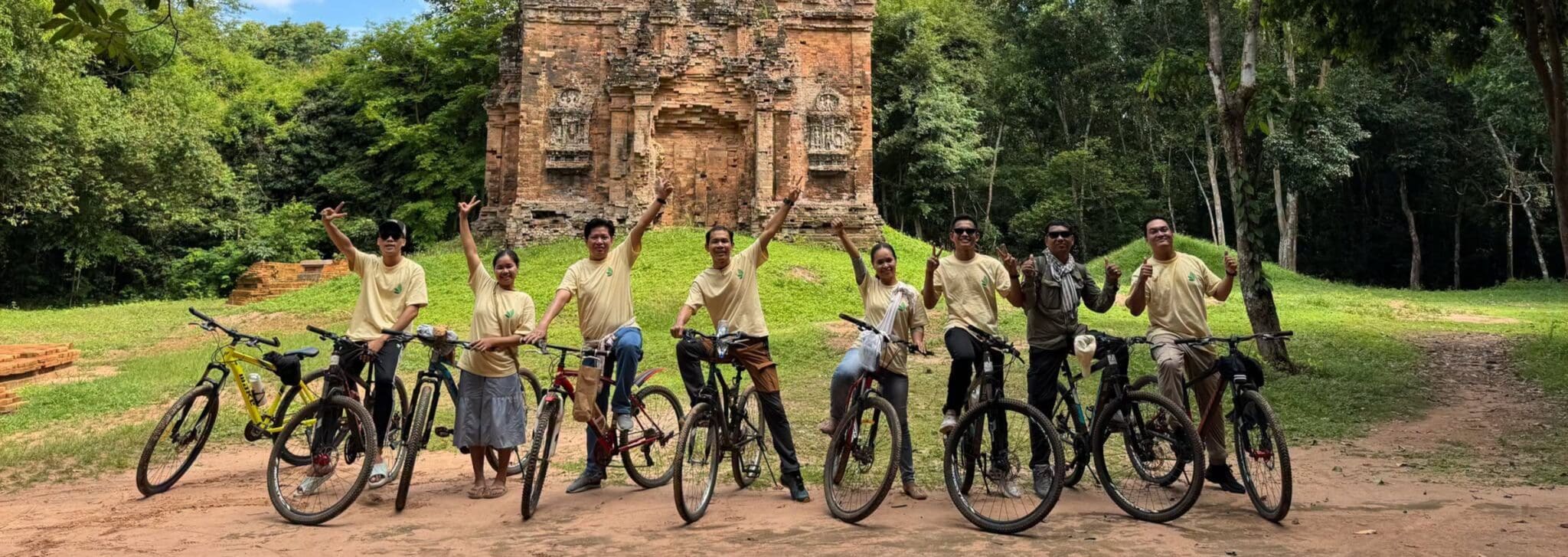
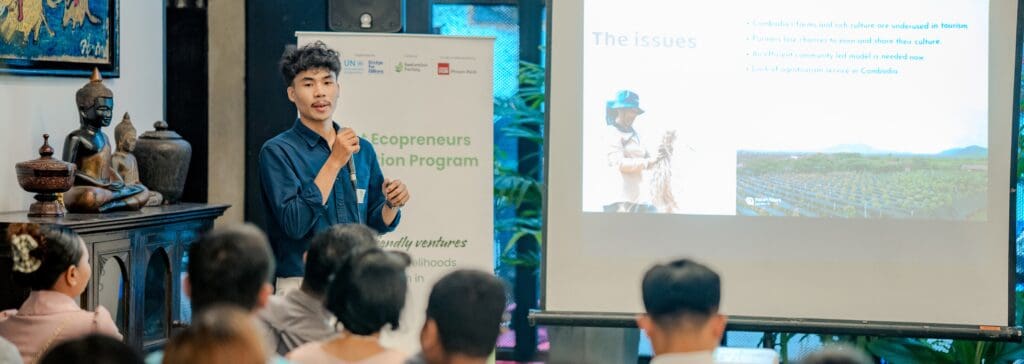
Last June, at the start of the rainy season, Impact Hub Phnom Penh brought around 15 ecopreneurs—each running a forest-focused venture—to Kampong Thom under the Forest Ecopreneurs 2025 program, aiming to strengthen forest protection, build community ties, and show entrepreneurs what conservation-linked livelihoods could look like.
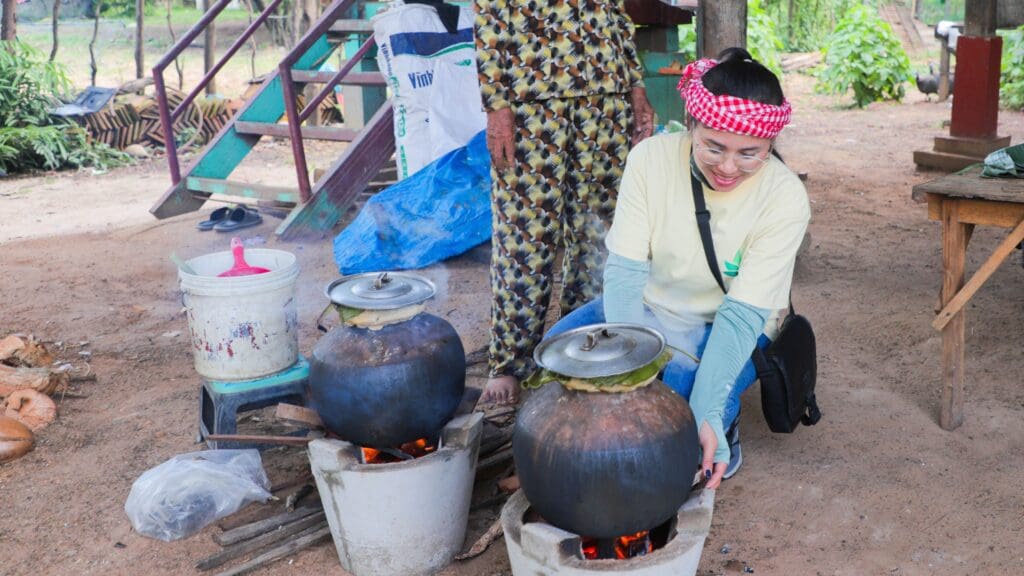
Over a few days: tree planting, a visit to O’Poung Roung Community-based ecotourism, learning to make the traditional snack num nea (នំនា) from a community elder, and homestays arranged by villagers themselves.
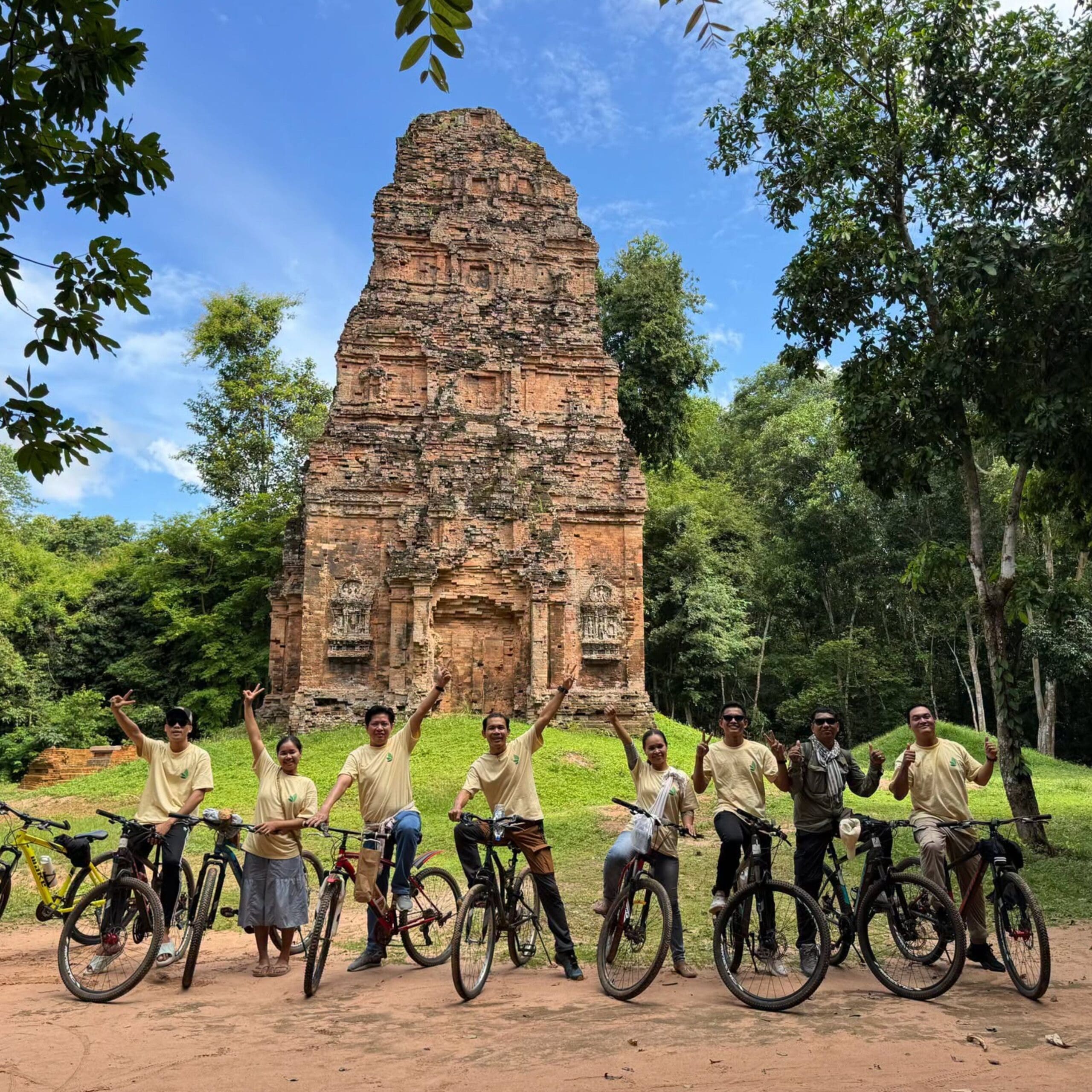
Most memorably, the group walked the Sambor Prei Kuk temple site — more than 25 square kilometers of vivid green after light rain, ruins clustered close together.
It left an impression that outlasted the trip itself.
When One Is Left With Initiative
Recognizing the opportunity, Roteh Tours — a Forest Ecopreneurs 2025 alumnus — began building tour packages into the same communities the group once visited.
Roteh Tours is an agritourism agency dedicated to showcasing and promoting sustainable travel and improving rural livelihoods. They connect travelers with local farming communities through immersive agri-tourism experiences.
"We only recently launched our official tour packages to Kampong Thom," Thach Rithea of Roteh Tours told us, "but before this launch, we had already collaborated on projects with several communities."
He said, “One project had just wrapped up with sapling cultivation with 150 families in O’Poung Roung, run alongside the community’s own leader.”
For Rithea, it confirmed what he’d already suspected — the potential was there, waiting for someone to organize around it.
“There are still many gaps that need to be filled,” he admitted. “We want to build it step by step — improving agro-tourism, since Kampong Thom has agriculture and temple heritage, but we haven’t turned it into a real destination yet.”
It’s the kind of thing we hope for every time a program ends — that people don’t just leave with what they learned, but carry it back to where they’re from.
As Impact Hub Phnom Penh, we want more of this. Applications for Khmer Tourism for the Future 2026 are now open for tour operators and facilitators looking to expand their market, build tour packages, and connect with community-based tourism in Kampong Thom.
You also might like
How Kampong Thom is becoming Cambodia’s next tourist destination.
What mission-driven startups actually need to scale: A look at the DGIx accelerator