What mission-driven startups actually need to scale: A look at the DGIx accelerator
I’ll be honest: when we kicked off the DGIx Accelerator, we weren’t entirely sure how it was going to go.
Yes, Impact Hub Phnom Penh has been designing entrepreneur support programs for a decade. But this program was a little different than many we’ve implemented previously — a longer program, at nine months; a very diverse cohort of already-established businesses; and a goal around investment readiness.
So early on, we gave ourselves permission to experiment and adapt — to let the program take shape around the ventures we selected, rather than the other way around.

- Annika Freudenberger
Impact at the intersection of digitalization and sustainability
The Digital and Green Innovation Accelerator (DGIx) is part of the wider Digital and Green Innovation (DGI) Action — a Team Europe Initiative active across Asia, Africa, and Latin America. The Cambodia program was implemented by GIZ Cambodia and designed and delivered by us, Impact Hub Phnom Penh.
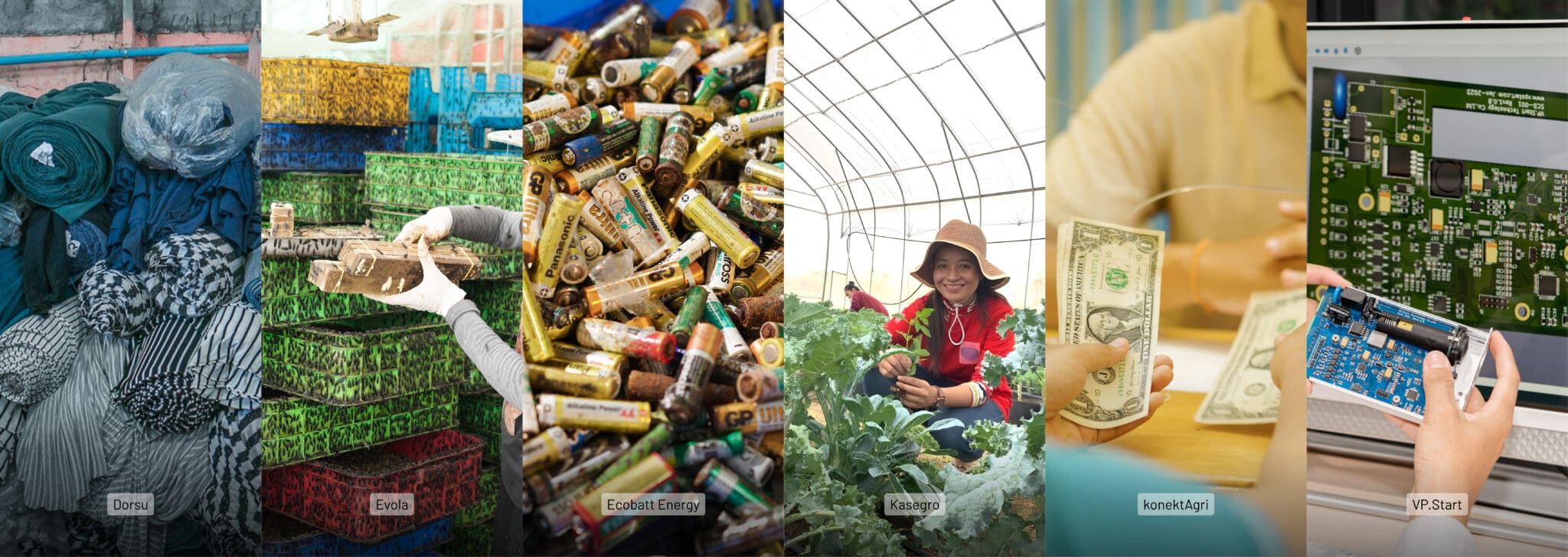
Our cohort of six ventures all share a common thread: they use digital, tech-enabled, or data-driven solutions to address environmental challenges in Cambodia. We’re talking about businesses like Evola, which recycles food waste through Black Soldier Fly production; Dorsu, which makes high-quality clothing from garment factory deadstock; Ecobatt, Cambodia’s first licensed e-waste and battery management company; Kasegro, bringing agri-tech to Cambodian farms; konektAgri, making agricultural lending smarter and fairer for farmers; and VP.Start, upgrading Cambodia’s energy infrastructure with smart grid solutions.
Slow, patient work over quick wins
When we launched the accelerator, we were clear on one thing: we didn’t want to put everyone through a generic training curriculum and call it a day. We didn’t want to organize a series of pitch events (unless they would provide clear value). We didn’t want to chase “quick win” KPIs that may make a program look good on paper, but don’t actually move businesses forward.
What we did instead was spend hundreds of hours going deep with each venture — over 620 hours of one-on-one advisory support across the six ventures, to be exact! “The program is like a dedicated pause and safe space that offers oxygen and framework for founders to breathe,” one of the program’s business advisors reflected. From zooming out to look at growth strategy to diving into nitty-gritty problems, each venture strengthened areas of the business that had been holding back their growth. Tightening financials. Fixing accounting and tax processes. Rebuilding internal workflows. Coaching leadership — not just founders, but mid-level managers too, because a business can’t scale if everything sits on one person’s shoulders. Gaining new clients and partners through targeted introductions.
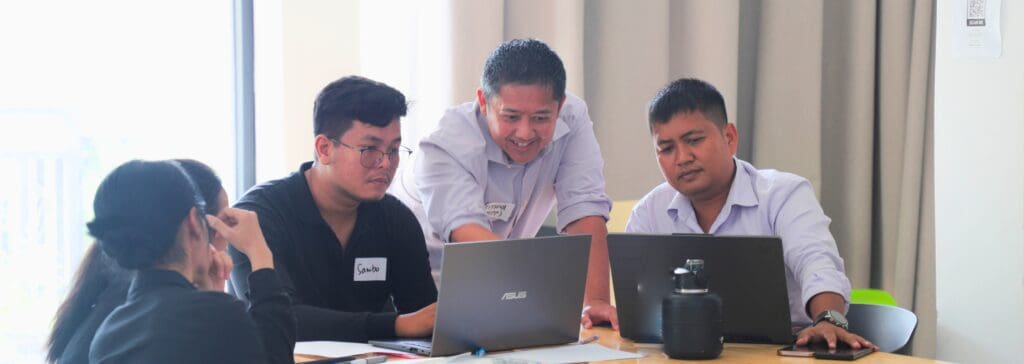
Was any of this “accelerated” in the traditional sense? Honestly, no. It was patient, transformative work and, most importantly, trust-based. Some of the deepest progress only happened in the final quarter of the program, because it takes such a strong relationship between a venture and the program support team to be able to really dig beneath the surface.
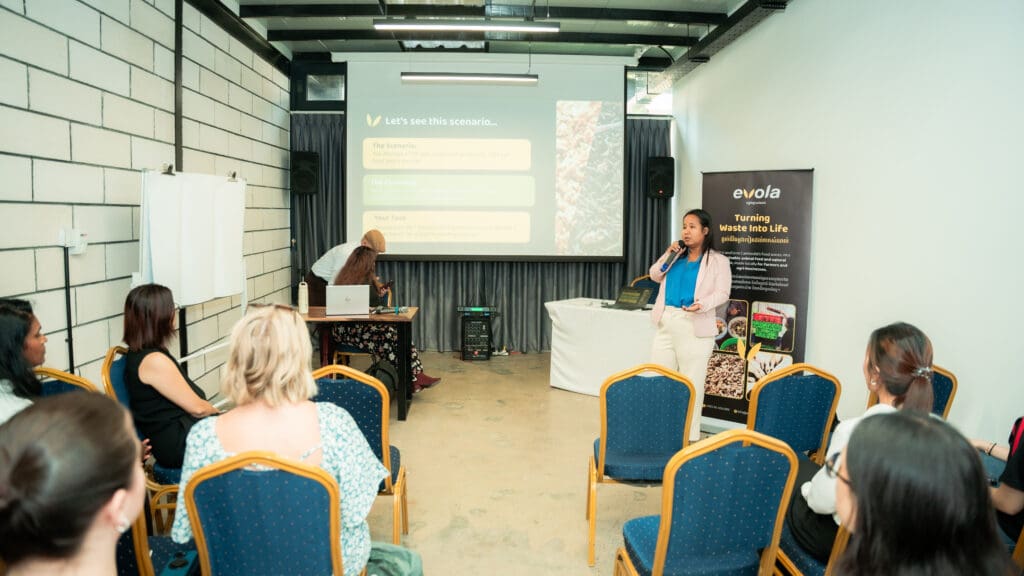
We also ran a “Sprint Series” — eleven day-long workshops covering investment readiness, financials, legal, impact measurement, marketing, and more, with 27 experts, founders, and financiers involved as trainers and speakers. We were deliberate about making this locally grounded: many sessions were delivered by successful Cambodian startup founders, so the content was practical and contextual, not theoretical. Alongside this, we ran a Leadership and Team Development Series, focused specifically on the mid-level managers who are critical to a venture’s ability to grow beyond its founder.
Beyond advising and training, the program also disbursed $60,000 in grant funding for R&D and digitalization — supporting everything from Evola’s new ERP and IoT system to konektAgri’s upgraded climate-risk scoring model to Ecobatt’s rollout of 70 new battery collection bins. We brought the cohort to Taipei for the Scale Up! investment simulation and the Social Enterprise World Forum. We ran an Investor Clinic where ventures got real, substantive feedback from actual investors — for several of them, the first time that had ever happened. And we closed with a public showcase event attended by over 180 people.
The results, nine months later
“Without DGIx, it would be really hard to scale,” shared Bou Ty, Founder and CEO of Kasegro. The startup came into the program with a suite of technology products but not yet a clear commercial engine. The venture ended the program with surging revenue, new strategic partnerships, and interest from investors and lenders. “With DGIx, we unblocked a lot of areas and we're finally moving forward with clear direction and a lot of momentum.”
Every business in the cohort saw their own growth surge, in their unique ways. Five of six ventures reported significantly increased revenue and profit compared to the start of the program. Every single venture grew its team, adding a combined 30 new jobs. Two ventures reached breakeven by the end of the program, after years of operating at a loss. Across almost every operational area we measured — governance, financial management, sales strategy, use of digital tools, internal processes — ventures rated themselves significantly stronger at the end than at the start. This business growth translated to bigger impact. konektAgri signed a partnership with Cambodia’s largest microfinance institution, a huge step forward to serving thousands of farmer borrowers. Evola collected 152 tons of food waste in 2025, compared to 110 tons in 2024.
But some of the most meaningful results are harder to translate into numbers.
“Everything changed through the DGIx program,” shared Evola CEO and Co-Founder Hunsopheary Hul. “I understand myself so much more now, and I can recognize my value better. I can see the growth potential in myself and the business. I have such a different mindset and confidence than I did a year ago.” And after months of working with a dedicated finance & accounting expert, “I was able to see that I'm not ‘bad at numbers.’ I just didn't have enough knowledge around financials and decision-making before,” Sopheary shared.
Evola overhauled its bookkeeping, tax declaration, and other internal financial processes; Sopheary’s team is now able to independently manage day-to-day finance responsibilities on their own; and Sopheary is able to engage more directly and strategically with the company’s financial realities.
What we learned about accelerating investment readiness
Remember when I mentioned that we weren’t sure how the program would go? Every program we implement becomes a huge learning opportunity, and DGIx was no different, particularly around our “investment readiness” mission.
Here’s something that sounds simple, but was critical to the effectiveness of the accelerator: investor-facing outputs are the easy part of investment readiness. Pitch decks, data room documents, referral introductions — those things matter, but they’re downstream, a later step. What actually makes a business “investment ready” is the core underneath: strong revenue, diversified sales, a capable team, clean financials, a clear growth strategy…
So that’s where we ended up spending most of our time. We didn’t abandon investment readiness — quite the opposite. But we came to understand it as a business-strengthening journey, not an output-based process. If a venture doesn’t enter a program with a reasonable degree of “pre-readiness,” as a program, we aren’t going to get them to the finish line in a few months by coaching their pitch or making investor referrals too soon. What we can and should do is meaningfully accelerate business growth and strengthening. And, importantly, we can help them be more strategic about how financing can fit into their scaling roadmap.
The results bear that out. At the start of the program, only 3 of our 6 ventures said they were actively preparing their business to attract investment. By the end, all 6 were. Every single venture reported gaining a better understanding of funding options and what investment readiness actually requires.
“Getting outside feedback and validation really built my confidence that we're on the right track, while at the same time, helping me see where I should be investing my efforts more strategically to accelerate our growth,” shared Vanna Sann, Managing Director of Dorsu.
And here’s something we’re proud of that might seem counterintuitive: a few ventures ended the program less eager to pursue investment in the coming months than when they started. Through the program, they developed better judgment around financing — recognizing that the business needed a little more time to grow first, or that a loan made more sense than equity at this stage. That kind of strategic awareness is exactly what we were trying to build, because our goal was never investment for its own sake, but rather about helping ventures understand how and when financing fits into their success.
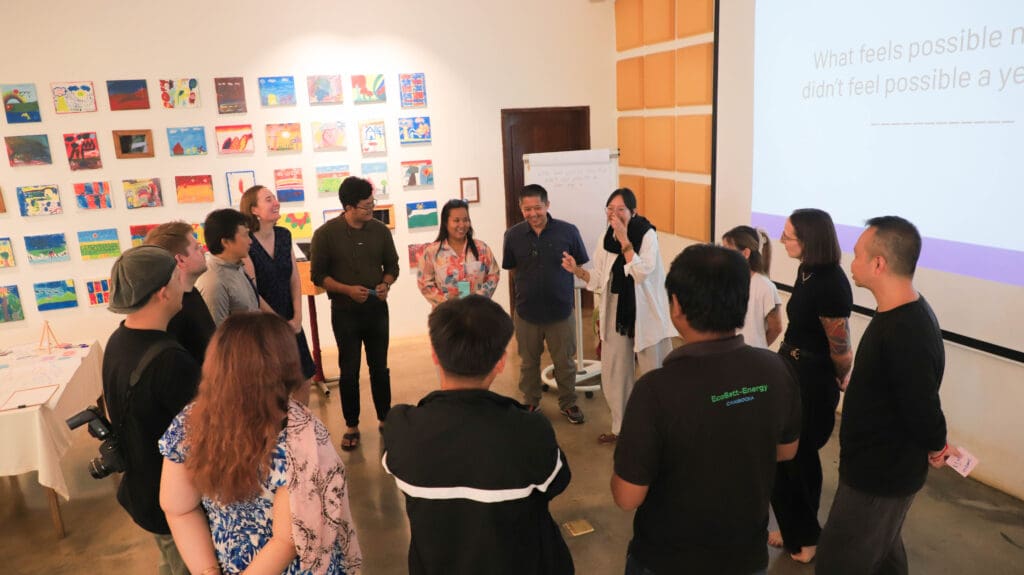
Working alongside these six ventures for nine months reminded us why this work matters. They’re building solutions Cambodia needs, and what they need now is an ecosystem that matches their ambitions — with mission-aligned customers, partners, and capital to accelerate their growth. Please feel free to reach out to our team to facilitate introductions.
And to learn more about our DGIx accelerator and learnings, check out our program impact report.
Our Partners
DGIx Cambodia is a programme implemented by Impact Hub Phnom Penh in partnership with the Deutsche Gesellschaft für Internationale Zusammenarbeit (GIZ) GmbH and funded by the German Federal Ministry for Economic Cooperation and Development (BMZ). DGIx Cambodia is part of the global DGI Action, a joint project between the European Union, Germany, France, Belgium, and Estonia.